The purpose of this Blog is to create wealth for your family, increasing financial literacy and understanding the strategies used by the extremely wealthy.


How To Profit like Warren Buffet

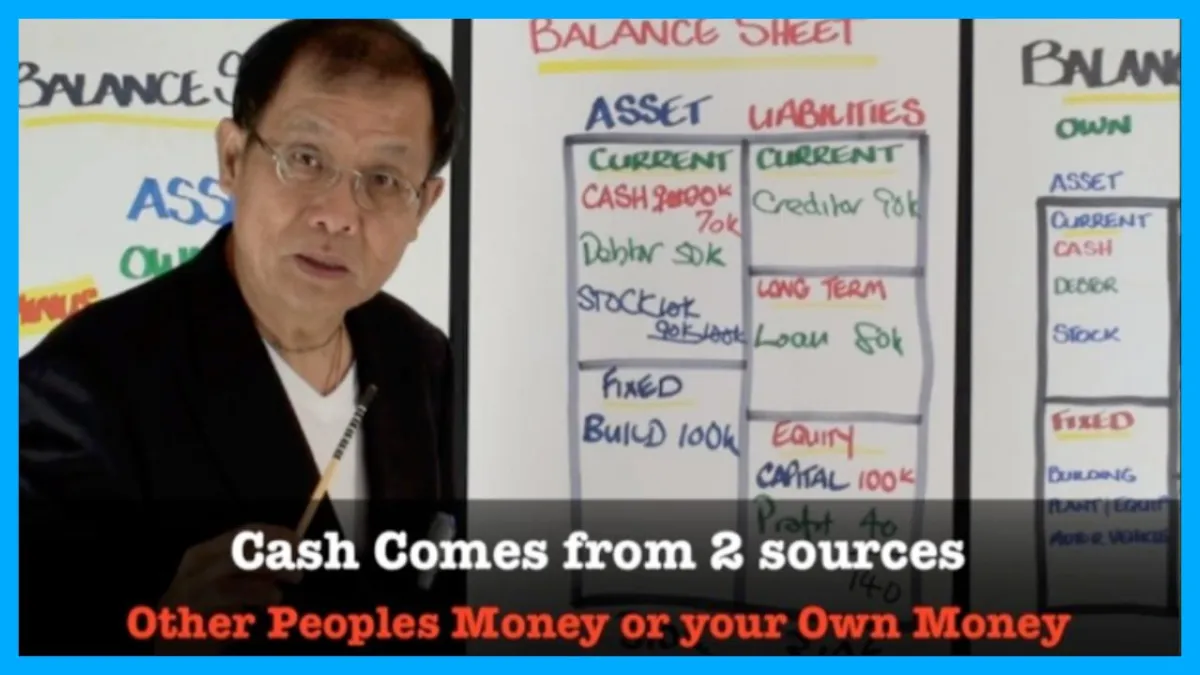
Lets look at the big picture of business looking at the flow of cash through any business even your household.

If you have any questions or comments please do so. And hey as seen as we are talking business please share this from our face book page

I trust you enjoy this short video I have found the more I understand this process the easier it is to make a financial decision.

Have fun and enjoy..

Business is all about small money in to receive big money out.

Follow the cash flow through the charts above to know the best use of the cash to ensure your business is successful and has a Durable Competitive Advantage.

Cash is BLOOD

Cash In:

Cash can be introduced from 2 sources Owner and Lender Owner introduces capital, cash or any asset of value. He expects a dividend

for the investment.
Lender introduces cash and expects interest on the cash.

The money flows into the business as working capital supporting the 3 elements of business.

Customers:

Used for credit sales to customers with credit ratings or valued by the business.

Product:

Used for the development of goods and services, enough cash for the creation of the product or services of the business. To build a stockpile of product based on supply and demand economics. Enough stock to ensure a constant supply is available to meet the demand without holding excess.

Cash is BLOOD

Cash:

Enough to pay for the operations of the business until a regular supply of cash is created by the business.

With the receipt of the BIG cash out from the customer. A customer is the machine that converts the small money put into the business into Big money out the other end. They are money multipliers. Next time you see a customer be joyous for here comes a money multiplier for you and your team.

Profit:

Is the difference between income and expenses created by efficient use of all the resource in the business, People, methods, machinery, materials and money.

Cash is the life blood of any business no cash no business.

The profit is then distributed to the rightful owners in the amounts agreeable to the receiver.

Tax:

First you need to pay the silent partner in all business the government in the form of tax. A good accountant will ensure this is kept to the minimum legal requirement.

Interest:

Next payment of interest to the lender who has supplied the cash for the operation to start and continue. The sooner this is cleared and not required as the business produces enough cash (Blood) to be self sufficient the better.

Debt:

Is not necessarily a bad thing as it can be used to grow the business faster in the right supply and demand economic cycle. What we do with debt is the key to successful business management. Use it wisely to grow the business and not to grow the EGO.

Dividend:

Last, but not least the owner gets a return on the investment.

Retained Earnings:

This is the cash flow returned to the business cycle to support the growth of the business. This would be the best strategy to support the rapid growth of the business.

How to increase your learning by 600%

Hearing-Speaking-Doing

I encourage you to share your understanding with a learning buddy. Tell them what the charts above mean to you!

Should you also take the time to draw the coloured charts for your self and pin them on your learning wall in the correct sequence.

WOW!!!!

Watch your learning explode before your eyes.

To understand  how to run a profitable business  go now to the top of the page and join us at

“Go Beyond The Numbers”

Thanks for watching this video watch this space for more street smart business skills.

Colin Burr Learn Accounting Fast

Warnings when buying an investment property

Further to my last post of conversations with Kerrie. Today we look at Kerrie’s warnings to the woman who wanted to sell her home in the last post.

The things to watch out for the lessons kerrie has learnt from 20 years as a property investor.

Colin: What are the things that she should look out for in that transaction? What are the things that may cause some harm? I guess I’m looking for the warnings here.

Kerrie: Okay.Firstly she’s going to put a tenant in there so she’s going to self-manage or she’s going to get property manager to do it.

Colin: What would you suggest under those term?

Kerrie: It’s a money thing. I’ve paid property managers to do a dreadful job and I’ve paid them to do a good job.

She’s living in the area, if she’s comfortable with that and she has done all the checks on the tenant and she’s fine with the tenant, and she doesn’t want to pay the 8.8% which is what they charge, she might consider that.

Use a property manager or not?

The alternative is if she got a tenant that doesn’t do the right thing, there’s a whole heap of rules and and regulations about what the process is and you have to get up to speed pretty quickly.

So it might be even in her best interest to put a property manager in for a 12 months so she can understand – Yeah, treat it like a business. Pick their brains, and she will see how the whole things comes together. But it’s up to the individual, for some people, property management is a lot of confronting with the tenants.

Colin: And it depends on your lifestyle I guess on what you want out of that, and if you treat it like a business and that’s just another expense

Kerrie: Yes exactly. And it’s tax deductible as well.

Colin::Ok, So you’re telling her to get a property manager– that’s one of the things to look out for, anything else?

Kerrie: When she goes to buy her new property, she wants to buy something to live in, in a different area to where her old property is.

Because she already has one, then she’s got an investment property. I’ve got investment properties coming out of my ears, I do not have a home that I’m living in.

Colin: If you want to get from where you are now, to becoming a property investor, the first step is not necessary to own the house that you want to live in.

Kerrie: No.

Colin: That’s just not the psychology that we’ve been given, isn’t it? Most people are out there trying to buy the house -

Kerrie: To live in – yeah.

Colin: Get the equity out of that house and become a property investor as opposed to just

Go straight to a cash flow positive investment property.

Kerrie: That’s exactly what we’re on. A typical example is the property I rented on the Island of Capri in Surfers Paradise. For me to buy that home it would’ve cost me about $15,000 a week in mortgage repayments – that’s 1.2M something like that.

I rented that property for $635 a week and it came with a pool package. It was such a good money-saver because not only did I save all that money on having rent, but the property market has dropped so drastically that now I could probably buy that property for $800,000.

So I would have lost hundreds of thousands in capital as well. So it’s a personal choice. As I said, if you were an avid gardener, you’d probably really going to want a property, but then you could put it in pot plants and take them with you.

Colin: I had a conversation recently with somebody recently had a structure with half-a-dozen property and then he lost them all for what ever reason, so is there a structure that they should put into place –

Kerrie: Oh, definitely.

Colin: First of all, what should she do with the naming of the property or the naming of the investment or the tax liabilities or the tax structure behind it?

Kerrie: Well structures are big – if you don’t put your property in the correct structure to start with, what would happen is somewhere along the track when you realize that you’ve made a dreadful mistake, it’s going to cost you tens of thousands of dollars to fix it.

That’s simply because when you change the name on a property, you have to pay the stamp duty again.

So if you and I had a property together, and then you said I want you to have it just put in your name, we’d have to pay the stamp again.

So a structure, if you set up your structure under a company and a trustee, I’m not a financial adviser, this is what I’ve done with my properties, every property has one company and one trustee.

The reason is, is the land text. Land text is incredible – it’s substantial like in Queensland, and each state is different, $350,000 is a land component. So we’re not talking about the building, we’re just talking about the land. Anything over is at three-fifty, three-fifty is the exemption. Anything over three-fifty it incur at the moment I think is a 2% land tax, every year.

Colin: So she can be well advised – once she locates the property and has cut a deal with the owner or in the process of cutting the deal, to get her own structure in place before the deal’s done.

Get your structure done first..

Kerrie: Yeah, you’ve got to get your structure done first because you can’t do it later.

Colin: Can’t do it later.

Kerrie: That’s exactly right.

Colin: Once she has identified what she wants to do, she should then – I guess it’s like everything, you need to have a good dentist or a doctor and a lawyer and an accountant and a mechanic, now if you need an IT expert

Colin: You need to have somebody, if she chooses this path, or whoever out there chooses the path of property investing, they need to have a team, a professional team together and they need to find that out first and go find out how much it’s going to cost, and handle those things so that they can do that as part of the planning.

Kerrie: One of the tricky parts and here’s a warning for your team is that, there are so many professionals out there who say they’re professional, like an accountant – you could ring your accountant and say what do you think about trusts.

Now the very first accountant we set up a company and a trust up through, we paid an incredible amount – like it’s $3,000 to set up the company and a trust up and this was quite some time ago.

So we paid them an incredible amount of money to do that, they weren’t property specialist even though when we came to them and said, “Are you property specialist?”, and they said yes they were. They weren’t property specialist.

They set it up, along the track we put a property in there and the bank, made us send the document back to them three times to amend it, they still couldn’t get it right. So the bank ended up charging us to amend our trust document to make it legal.

Colin: Right, okay.

Kerrie: Which we paid because they couldn’t do, we’ve given it back to them and we didn’t ever deal with that accountant company again.

Be mindful who is on your team..

So you’ve got to really be careful of who you are using, if you get the wrong people and they give you wrong advice, boy is it going to be expensive!

Colin: And that’s like everything professional, like trades people, there are good carpenters and there are bad ones, so professionals are just the same. That’s been my experience as well. So she could be well advised to have located her own legal and property law structure and a tax position, understanding her current tax position as well.

Kerrie: That’s right. Because with her income, if she doesn’t do that before she goes into another Property, it’s not gonna be helpful.

To Be Continued…

Colin Burr   Learn Accounting Fast

How to replace your income in 3 years or less

Hi I have been very busy over the past 2 months interviewing a very successful woman who has made her fortune in real estate investing. Kerrie Mercel is an active in vestor in Australia specialising in selling homes that must sell today for the asking price.

This video is a conversation with Kerrie on how to buy a home with no money down.

Colin: Kerrie. So you had a conversation this morning with an inquirer what I would call a typical “Aussie Battler” somebody who wants to move from where they are now to creating wealth in the future. So you want to share that story with us and what advice you gave this person.

Kerrie: This Woman lives in South Australia. The South Australia market is in a state of over supply at the moment. Now what that means to anybody who has a property there it means that the property market is probably falling or it’s very flat or not that easy to sell a property.

The Current situation

She bought this property, she didn’t tell me how long ago but she had it for a while and its worth less now than what she paid for it.

Currently if you’re in South East Queensland you would know that story very well because the property market has fallen considerably. Brisbane is falling at the moment, however it is slowly starting to move, but the Gold Coast won’t start to move probably well until next year (2013) if we’re lucky.

Anyway, what she’s going to do is to put a tenant in her existing property rather than sell it and that will pay for the loan.

Because she can’t sell it. If she paid for $400,000 for the property and it’s only worth $350,000, the moment she sells it, the real estate agent will want their cut, the person buying it will want their discount because it’s a very slow market, and then the bank will want the surplus.

So if she sold it for $350,000 she’d be really lucky to clear $320,000 but on the loan it might be $400,000 So she’s got $80,000 that she’s looking in her wallet to find.

Nobody’s got $80,000 in their wallet. So she can’t sell it, but she can’t keep it.

So she rang me to say – what she wants to do is to move to another area, get into the market, buy a cheaper property and she’d seen me on the internet and wanted to know how she could do this with no money.

She said, “But we’ve got no equity because what we were hoping was when we bought the property that it’d go up. Had that happen they would be able to use the equity in the property as a deposit in their next one.

Now, if you had spoken to any of the top property gurus, even up to five years ago, they were all saying the same thing, not all of them, but the majority were.

You buy a property one every year and then in seven year time you live on the equity of those seven properties.

You don’t have to buy anymore because the property prices just keeps going up and up, the rents keep going up and up, so just get the rent back and you just keep going to the bank and borrowing the equity.

Our world changed!

Colin: Yes that was in a time were the supply and demand was out of balance. More demand than supply.

Kerrie: Yes!

Colin: Now it’s flipped the other way around.

Kerrie: Worse than that the G.F.C (Global Financial Crisis) came and the banks attitude is, once you get to that magical age of 50 the banks don’t even want to know you.

So people who did do this strategy and find they can’t do it anymore. So there must me thousands of people over fifty who’ve done that strategy and now they can’t borrow on the equity any longer because the bank say, “You’re too old, we won’t give you a loan” You just can’t do it anymore.

Kerrie: So I suggested to her what she could do is a No Money Down deal. I said, “At the moment your problem is you don’t have the deposit. If you’re putting a tenant in your existing house.

Colin: No Money Down deal? That sounds interesting.

No Money down deals

Kerrie: That sound very, enticing doesn’t it?

Interviewer: I’m certain there are many people out there that would want to know how to get a No Money Down deal.

Kerrie: Ok. The No Money Down deal –what you need is your deposit. The bank isn’t going to give you any money unless, you have their deposit.

Now, what the bank normally want is 20%. If you only get like a 10% deposit, the bank charge you mortgage insurance and it’s like incredibly expensive like about $10,000 on a 10% and if you do a 5 percent it’s like $20,000. So it is incredibly expensive.

So, she can go off and she can do a No Money Down deal but to do that, she has to get a deposit. So – let’s just work on 20%

Ask the family?

Now she’s got.Her parents or a brother or a sister, any family that have got property who are prepared to lend her the equity in that property? The banks will look at that.

Colin: So first, you’re suggesting is to go to the family and look for equity within the family?

Kerrie: Normally, if your family is half-decent they’ll want to give you a start-up.  If they can just borrow, so the money doesn’t directly come out of the family’s property. If mum and dad had put up their house, 20% of that equity is from their house.

That doesn’t seem different in their life, provided you pay it back. If you don’t pay mum and dad’s equity back, mum and dad are gonna lose their home.

So – don’t be disrespectful. If you’re gonna ask someone who’s got equity to use their home, you make sure you honour that and that they don’t end up losing their home – ‘cause I’ve heard stories of people who haven’t honored their responsibility.

Kerrie: So that’s one way you could do it.

Ask a developer?

Now, another way you could do it is if somebody who’s got a property that they’re having trouble in selling, now remember anyone in this area of Southeast Queensland is having trouble. Someone who’s having trouble selling that property and can’t sell, but really want to get a good price for it would be someone like a developer.

Colin: Yes.

Kerrie: ‘Cause when they started developing the property, it might have been five years ago. They weren’t expecting the market to be really bad the way it is now.

So what you could do is come up to a developer and say,

“I’ll pay you full asking price for your property

Because what he has to do at the moment to sell his property is to go to a marketer, the marketer can charge $30,000. So he’s gonna lose $30,000 to a marketer, and he’s also going to have to either add value at or discount his price.

So if you add up all the things he has to do to move his property, he’s probably down $50,000 of the asking price.

What I’m going to ask you to do is to put in the 20% equity.” Right?

Colin: Yes, to the bank for the deposit?

Ask for a deposit?

Kerrie: To the bank for the deposit, that’s right. Then you might even be really cheeky and say “I want you to pay the stamp duty as well.

Colin: Right. That’s like a deal you put to somebody who feel they are over a barrel. Do they do this?

Kerrie: Yes they do. Well, I sold a block of units in Brisbane 3 years ago and I sold the units with the 20% equity payable in 2 years.

I would try to get five years out of the builder and the builder would probably be happy to see you. Because they can move a property, they cleared their books.

Look, their profit would probably be more than 20 percent in the property anyway so they get the cash component back so that they can move on.

Colin: Yeah, Ok.

“for sale by the owner”

 Kerrie: That’s just one a builder. They’re probably more open to this kind of thing because they understand the process.

You could also do the same thing to somebody who’s selling a property, who couldn’t sell their property. So you might look at for sale by the owner 

Web sites.You might go to one of those and find that there is an owner who is prepared, like I was prepared to, offer a 20% discount so that they can get the asking price for their property.

Colin: Ok. So you gave your caller a number of different scenarios, how did she feel? How did she respond to that?

Kerrie: She was delighted. She just went, “Thank you for telling me that. It would never even occur to me.” She was absolutely delighted and said I’ll go off and do that now. I’m thinking, she must’ve had a family member she could ask.

Colin: So you just hit the right button for her.

Kerrie: Yes. that’s right

Colin: So that’s somebody who’s has a property to start with. She was looking to create another one and get some relief from the cash-flow situation.

Kerrie: That’s right.

Colin: So, correct me if I’m wrong, she was on the verge of losing but she still wanted to win?

Kerrie: Yes, that’s right .

Colin: She was now looking for a strategy of not losing and winning at the same time.

Kerrie: That’s right. If she does – what I say, it’d work for her.

The property she’s in, it’s a lot more expensive than the one she is looking at. This is a situation thousands of people are in today, they can’t sell the property and they can’t keep the property, so all they can do is lose.

Colin: Ok. So let’s just take this forward two years, as if she’s taken the advice that you’ve given her. What position would she be in two year time? Now she’s sitting with a house that she can’t afford to pay, where would she be in your view in two years time? At the current climate, The supply and demand flipped over it doesn’t matter if it flips back the other way completely or halfway or 25 percent.

Information wont make you $1,000,000 ACTION will

Kerrie: Ok. In two years time, she’s going to have 2 properties.

The dearer property she has, she tells me that when she puts the tenants in there, the tenant will pay the expenses on the property.

So that means she is not financially stressed by the dearer property that she has.

Now if she’s smart, she’ll go and she’ll get a quantity surveyor today to depreciate the white goods and the whole building and everything that’s in there.

So she could make about $8,000 a year, depending upon the condition the property is in just by getting a quantity surveyor.

Now if she was extra smart, she could come in and she could say

I want an INTEREST ONLY loan

Because it’s now an investment property, it’s now a tax-deductible, the interest – and so all the expenses on the maintenance and the other things. So she could turn that property into a profitable exercise. Where at the moment it’s not profitable simply because she’s living in it.

Colin: So she’s obviously going away feeling quite happy and excited. If she was to ring back now, what would the next thing that you would be advising her once she grabs the property. What are the things that she should look out for in that transaction? What are the things that might causes some harm, I guess I’m looking for the warnings here.

Kerrie: Ok, the warning are –-To be Continued…

If you want more in this series of conversations go to

Kerrie Mercel  http://www.wikipropertyinvesting.com

Regards

Colin Burr

Learnaccountingfast.com

Expand or Contract-Your Choice

Life’s Basic Choice Is To Expand or Contract:

Colin now faces the reality that if he doesn’t take some action he will not be able to expand his financial position to reach his desired goal.

His current position requires him to create a surplus as he is now spending all he is earning.

To do this he first makes a list of all his expenses for each month and totals them for the 12 months (1 Year).

Looking at each one seperately he is faced with the decision, “do I need this or do I want it?”

Tough decisions but they need to be asked. it will all come down to what he is willing to go without in the short term so he can have the longterm plan he desires.

Wealth is created by surplus

Nothing in the material world comes without a price. it is paid for in time intelligence and money.

Colins choice is to reduce his expenses and increase his income so he can have his goal in just 5 simple years.

It comes down to his own personal discipline to go without and reduce his life style to ensure his goal of financial freedom is realised.

Wealth creation is not rocket science, it starts with personal discipline. The act of living within your means. Where each month you are in a position to save a percentage of your income.

This is no different in a business a corporation or in fact a country.. To increase wealth is to satisfy more people for their number of days forward.

In this instance, it is to satisfy Colins number of days forward. To achieve this he must take appropriate action each and every day.

He must ask the question honestly “Do I need this now or can it wait until I am more financial?”

Instilling this discipline not only himself but also in his partner and children.

This approach to life will ultimately lead him and his family into a position of financial freedom. His next choice is, what is the best thing to do with the surplus? to ensure this money is constantly working for him 24/7.

May 2013 be a year of growth and happiness

To be continued in the next video..

Colin Burr

Learn Accounting Fast


It’s Crunch Time

Wealth is in the mind first then the pocket:

The Goal: get your money working for you not you working for money:

To increase your worth from $8000 to $100,000 in 5 years an increase of $92,000 that is $18400 every year for the next 5 years. Is this possible?

If you make a simple profit and loss statement of your income less your expenses you will see where your money is going now. This exercise will give you the result of your current thinking and life style.

If this is what you want from your time, then continue to do the same thing. If not what changes do you need to make?

To breath in we must first breath out. Simple I know but we sometimes forget, for us to get more we have to give more. Give more time to work or give up some expensive uses of our time and money.

In this example Colin is under the illusion he is doing OK in life, however if he has the desire to increase his worth in just 5 years then he must change what he is doing with his time and money.

Colin looks at each expense with a critical eye and must “ask the question” is this wanted or needed?

He now faces the ultimate question, “do I wish to contract or expand”?

If he chooses to expand then he must make the changes Now… For if not he will never achieve his goal, to increase his wealth to $100,000 in 5 years.

In the next Video we will see what his options are and the action he can take.

A question for you. Have you made your own income and expenses statement yet? to know what are your current spending habits?

Income: all money coming into your life every month from where ever…..less your

Expenses: all the money going out every month to wherever?

This will give you your current surplus to see what you can do to increase your wealth.

Colin Burr

Learn Accounting Fast


“$500,000 in Assets in 5 Years” Take 2


$500,000 within 5 years

Balance Sheet:

A Balance Sheet is simply what you own less what you owe leaving you what you are worth at any given point in time. Start your 5 year plan by deciding what it is you desire to have in 5 years time.

These Are Your Assets.

The next logical question is “well how do I get the money to pay for theses assets”?

As logical as that may be the answer seems to avoid most people. So where do we get the money.?

On the opposite side to your assets in a Balance sheet are ..

Your Liabilities.

Here you add what you owe . In other words where the money is going to come from. Here you can add who you will owe this money too and how much you will owe.

This could be the bank or institution, family friends or in fact other people who you may join with to achieve a joint goal.

The reality is there are no real rules and you can arrange the funds from virtually anyone.

The key  is the agreement you reach with the supplier of funds. Such an agreement must be clear and concise as to the roles and responsibilities  including the exit strategies of both partners.These documents can be drawn up by your legal advisor and signed by both sides of the deal.

Keep it simple, binding and agreeable by both people.

Have an Abundance Mentality:

At this point in the process it is best not to make your decision based on any negative assumptions. as this will stop the creative abundant flow of ideas and possible options. Anything is possible. The question to ask yourself is simply “What do I need to do to make this happen?

Share this with a friend who is open and supportive to your ideas, toss around some alternatives.

I am reminded of watching George Harrison when he put the “Travelling Willburys” Together he was going to pick up a guitar from Bob Dylans home studio. He got a couple of friends to come along as well. They sat down and decided to write a song with words out of a bunch of magazines.. wrote the song decided to call it “Handle me with care” which was written on a box in the corner and the rest was history…The key here is to go with the idea that everything is possible.

We will cover the next steps inside the next video.

Join us at “Go beyond the Numbers” to discover the street smart business skills inside of you.

Colin Burr

Learn Accounting Fast

How To Become A Highly Respected Business Person


Design Your 5 Year Plan

Design Your 5 Year Financial Plan…

Everything is attached to intent by a connecting link

Sit quietly in your favourite spot, Take a deep slow breath and focus on what it is you would like to have in your life in the next 5 years.

See your home , Your family, Your friends and your possessions. Take time to feel the ownership of such a life in your minds eye.

Then write down the estimated value of such a life and possessions.. How much cash will you require to Be Do and Have this lifestyle?

Cash is Blood..
There is an old saying “before you go in the front door you must know how you are going to exit the back door”.
In other words you need an exit strategy or an escape route. In a 5 year plan we need to have some sort of protection against the challenges of life.
Starting a saving strategy to save a percentage of all income into a storehouse account on a regular basis will eventually give you the back up should you require it.
Saving 6-12 months cash flow that you require to live your current life style, will give you the protection you need.  Just as a body needs blood to keep performing, so your dream needs cash to keep it moving forward. A simple habit of saving every week.

Currency versus Money

Saving your currency (Cash) each week is one thing, another is to transfer a proportion (60%) of the currency into Gold or Silver coins (Money)

This practise is another form of insurance against any collapse of the current world fiat currency. This is the second step towards wealth creation. This strategy will build a stronger saving base for your financial development.

Gold and Silver fluctuate from day to day but holding them for insurance as well as an investment for the longer term, gives you added security.

Gold and Silver cannot be reproduced by man and so hold their value over time. Inflation on the other hand is working against your currency dropping the value every year little by little.

Develop your own financial plan for the next 5 years. See yourself with a better lifestyle secure in the knowledge you are moving forward. Hold on with personal  discipline to achieve your desired result.

Oh and finally one more thing “Don’t give up”

Colin Burr

Learn Accounting Fast

Cash Flow The Key To Your Dreams

Why Financial Plans are critical to achieving your success.

The course “Cash Flow The Key To Your Dreams” began in 1998 while delivering our then public course “Accounting is EZY ”

Inspired by the questions we received from the people attending in Kuala Lumpur Malaysia.

We saw a very real need for people to understand their own plan . Where they wanted to be in the future.

Many of the people attending where sent by their employers to improve their business skills to understand how to read and interpret financial reports.

This they achieved in just 16 hours. However when it came to their personal lives they could not see the similaritites to their respective business’s

So we decided to develop a programe that would show them, How to view their own lives as a business and use the same street smart  business skills they where now using at work and apply them in their own lives.

This course is now being developed on line. Peter Ho a world leader in facilitating business and financial education to the corporate world of SE Asia including Australia and New Zealand  and the Middle East is sharing a simple but effective way to develop your own personal wealth in just 5 short years.

“Begin with the end in mind”

Begin today with the image in your minds eye of what it is you wish to Be ,Do and Have in your life 5 years from now.

Napoleon Hill in his world best seller “Think And Grow Rich” said everything is created twice. Once in the mind and then in reality.

When you know clearly where you are going and when you want to arrive you can begin to make your plans. The same process as you plan your holidays.

This will now give you an action plan of what it is you need to do today, to take the first steps to achieving exactly what it is you want out of life.


Plan-Do-Check-Action

  • Plan: During my discovery of Total Quality Management in the early 80′s, I found a simple, very effective system of thinking to help me when developing a plan.  I have adopted this system and share it with you. My plans always have the same structure. I ask the questions?
  • Man: Who are the people needed in the plan and what is it I expect them to do to ensure the plan comes to fruition on time and in budget?
  • Method: What methods of action are required? Is it Phone ,internet  or direct marketing ? I look at all the methods I can employ to reach my goal.
  • Machinery: What machines and equipment are required in the plan Cars , Trucks, Planes,Computers, Laptops iPad or I phones.? explore the best options.
  • Material: What materials are required here ,? include software, brochures, what ever materials are needed to complete the tasks.
  • Money: What do I need it for? when do I need it? How much do I need? who is going to supply this at what cost?

Having answered al the questions, I then compile my plan and look at the cost of each and every item to complete my financial plan.

Cash is BLOOD-the key to your dreams

  • Do:  From here I prioritise the process. Identifying the correct timing of each activity. As this maybe a new project I am introducing into my life I now carefully allocate the time and resources available in my life to ensure the success of the project without the chaos that comes from over commitment. Timing is critical to leading a peaceful existence. I avoid the conflict of time by allowing family and personal time to ensure the project not only succeeds but not at the cost of my health and relationships.
  • Check:  Continually checking my efforts against my plan to ensure I’m on track or in fact if I need to reschedule activities to a more effective time. Every action has a reaction I have found that over the years I cannot be attached to the result of my action for once it is done it is out of my control. My intentions and the quality of the action will produce the quality of the result. I then look and see what the results have produced and what i can learn and do better. Continually thinking of how I can create a system that will leverage my time and resources. keeping this simple thought . “If I Plan Do Check and Correct I will become Perfect”
  • Take Action:  Life’s basic choice is to contract or expand with this in mind I see who needs to take the correct action to move the project forward. I have found that very careful attention is required when giving instructions to your team, to ensure they fully understand what is required and what standards are acceptable. I prefer to give all instructions in writing with confirmation of understanding. This may seem a little tedious at first but down the line I have found another  principle working slow time spent going in  creates a smoother faster result on the way out with little to no chaos.
Information wont make you $1,00,000 Action Will

Colin Burr

Learn Accounting Fast

 Page 1 of 7  1  2  3  4  5 » ...  Last »